Edward S. Thoden
Edward Thoden was born in Weehawken, New Jersey, in 1926. Edward grew up in Jersey City in a time where industrialization and logistics was king, Despite the great depression, Jersey City continued to expand, even to the extent of gaining a baseball team, the Jersey City Giants, in 1937. Perhaps the industrial culture of his area would influence his choices in later life, but with the outbreak of World War II, a normal life would have to wait for Edward, because he would enlist in the U.S. Army in October of 1944.
The war in this time period, at least in Europe, had become fairly stagnant. The U.S. Army had made a large breakout from Normandy, reaching as far as Germany, and the American invasion of the Netherlands had already collapsed. The majority of the Army in Northern Europe had taken up defensive positions in and around the edges of Germany., only to be caught entirely off guard by a massive German assault in the winter of 1944 and 1945. Many thousands of men were lost, and replacements were desperately needed as you will see in some other examples within the museum. With that information, the training times for soldiers in American were shortened. For Edward Thoden, that would be his ticket to combat in Germany.
Edward reached the front lines on March 30th, 1945, with Company E, 414th Infantry Regiment, 104th Infantry Division “Timberwolves” as a Rifleman in a light machinegun section. The 104th was spearheaded by the legendary Major General Terry Allen, who formerly commanded the 1st Infantry Division in North Africa. The Timberwolves were the Army’s first unit to be trained in night fighting, and often, as noted in a report from the former commander of the 2nd Battalion, 414th Infantry, the men preferred to attack at night.
At this point in the war, several American divisions had already crossed the Rhine River due to the German failure to destroy the Remagen Bridge. These American divisions covered hundreds of miles of German farmland and industrial areas in a matter of days, with the end goal to encircle the Ruhr industrial area. This rapid advance is partially due to a tactics change within the Army, where the infantry would ride on the backs of tanks into battle, often with the armor bypassing areas where the infantry could dismount and eliminate the opposition. During this period, Edward and the 2nd Battalion, 414th Infantry would be attached to Task Force Lovelady (named after the commander, William Lovelady), working closely with the 2nd Battalion, 33rd Armored Regiment of the 3rd Armored Division.
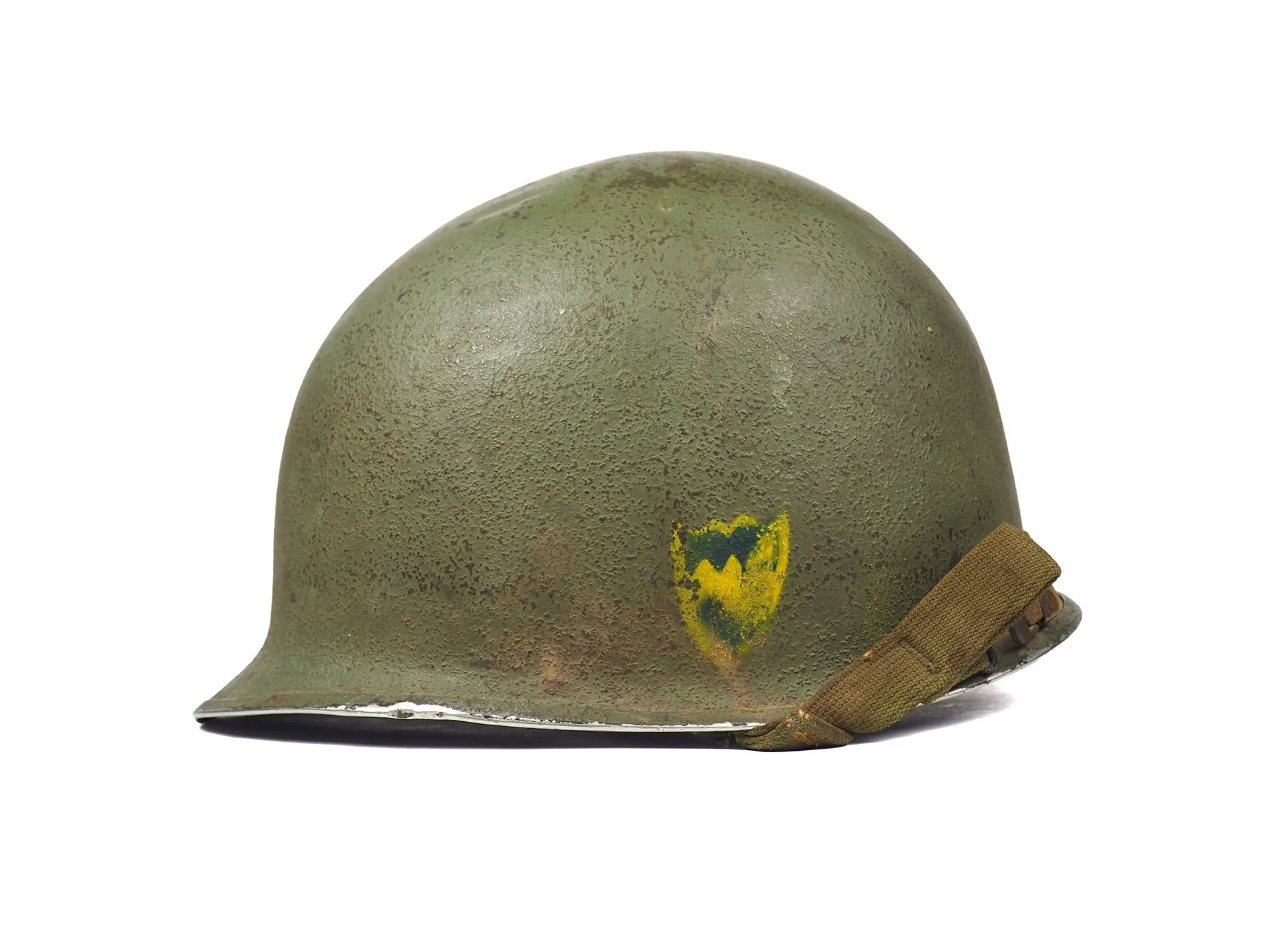
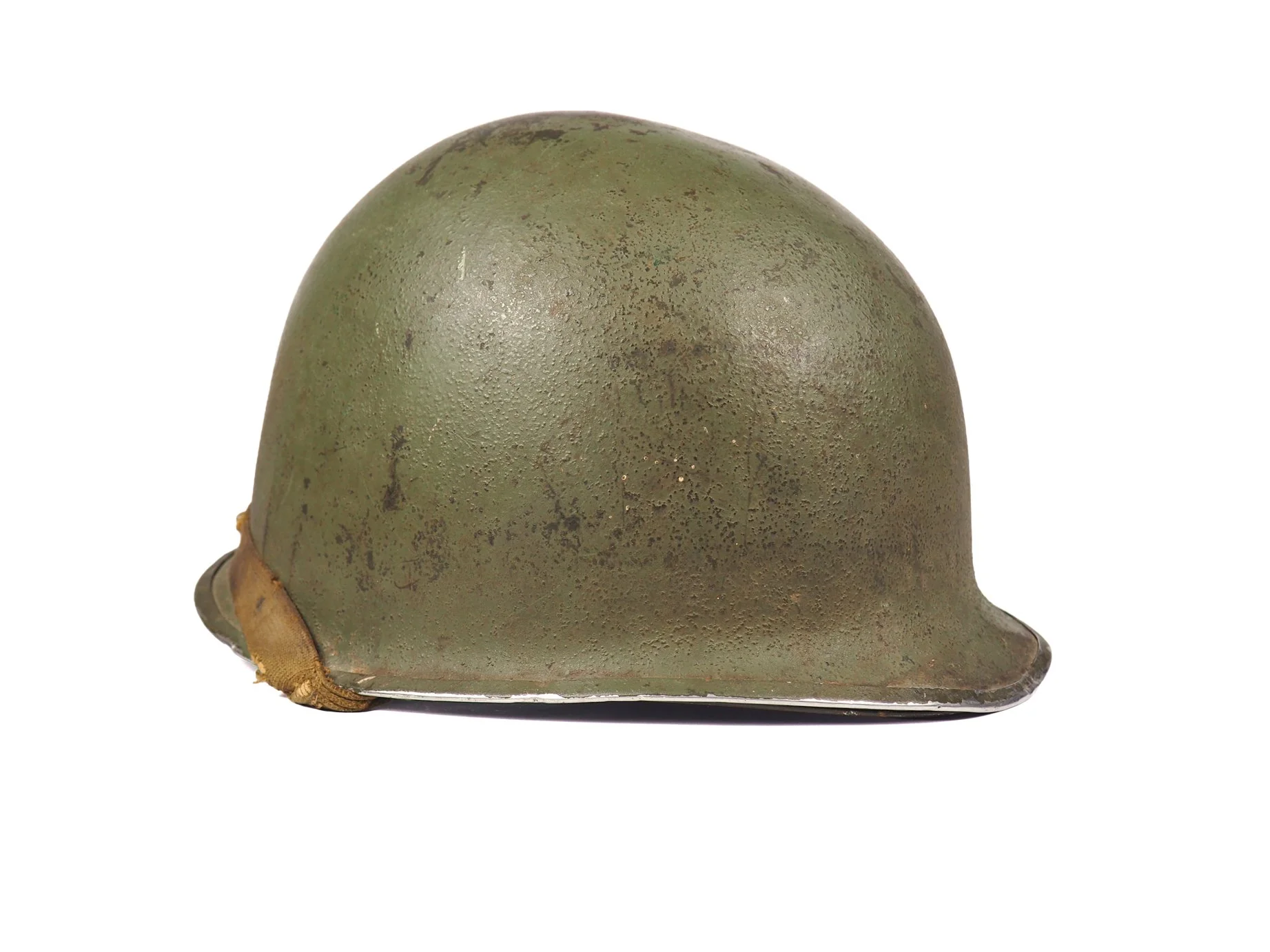
This shade of green is highly typical for 104th Division painted helmets.
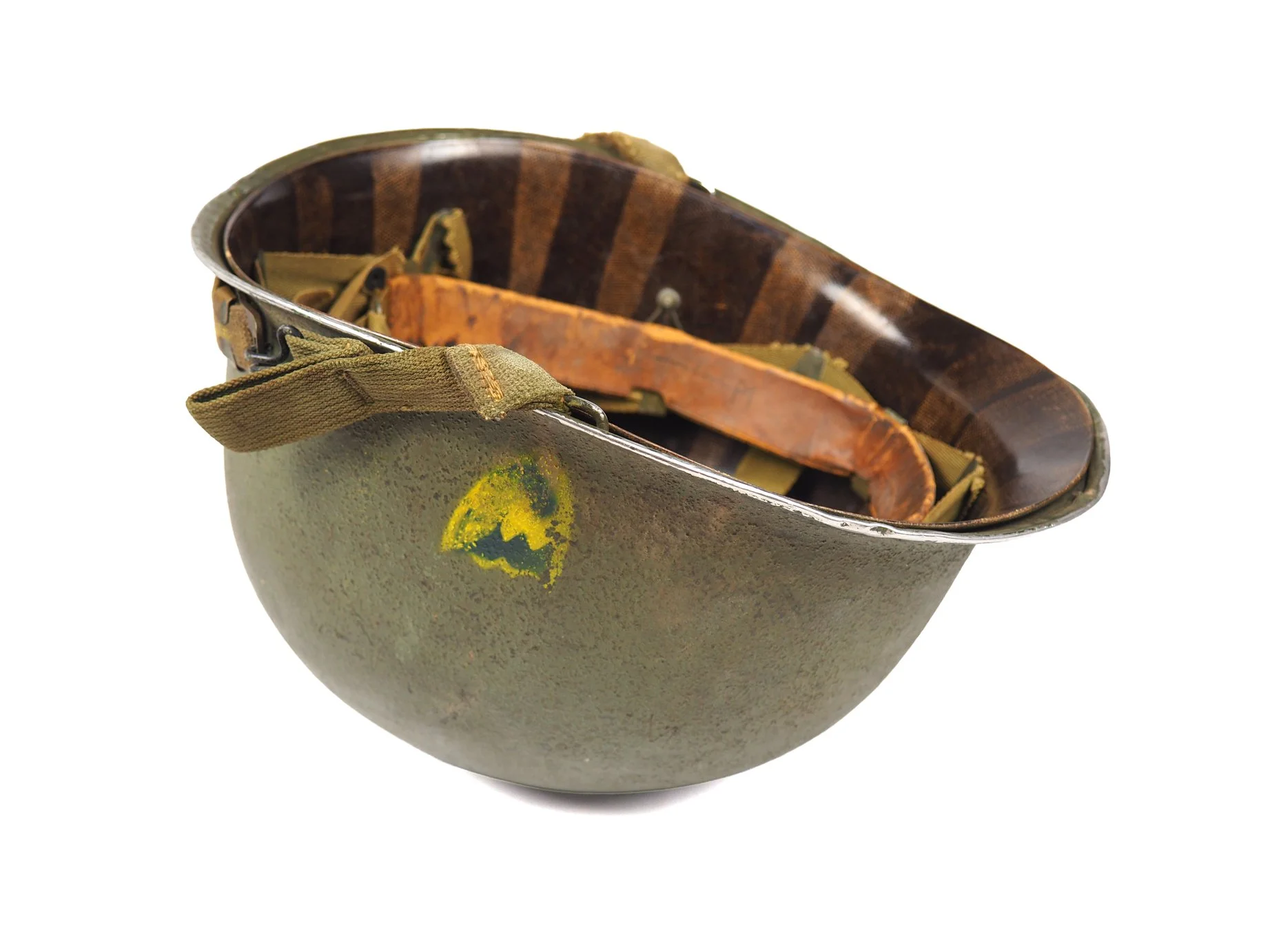
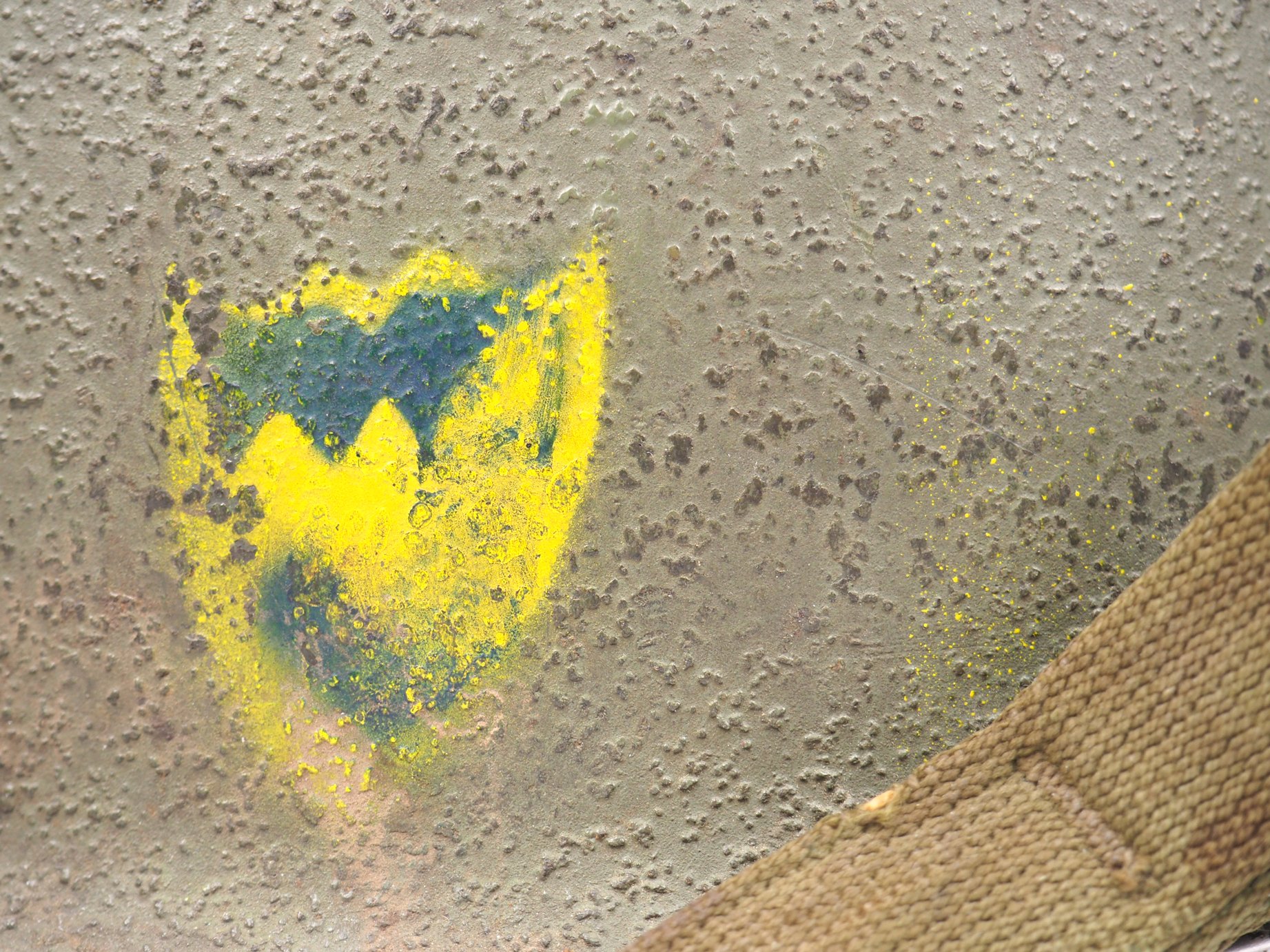
The simplified 414th Infantry Regiment Distinctive Unit Insignia (DUI). 104th helmets are often paired with a 104th Division paper decal or stencil on the right side. These Timberwolf helmets were painted post World War II.
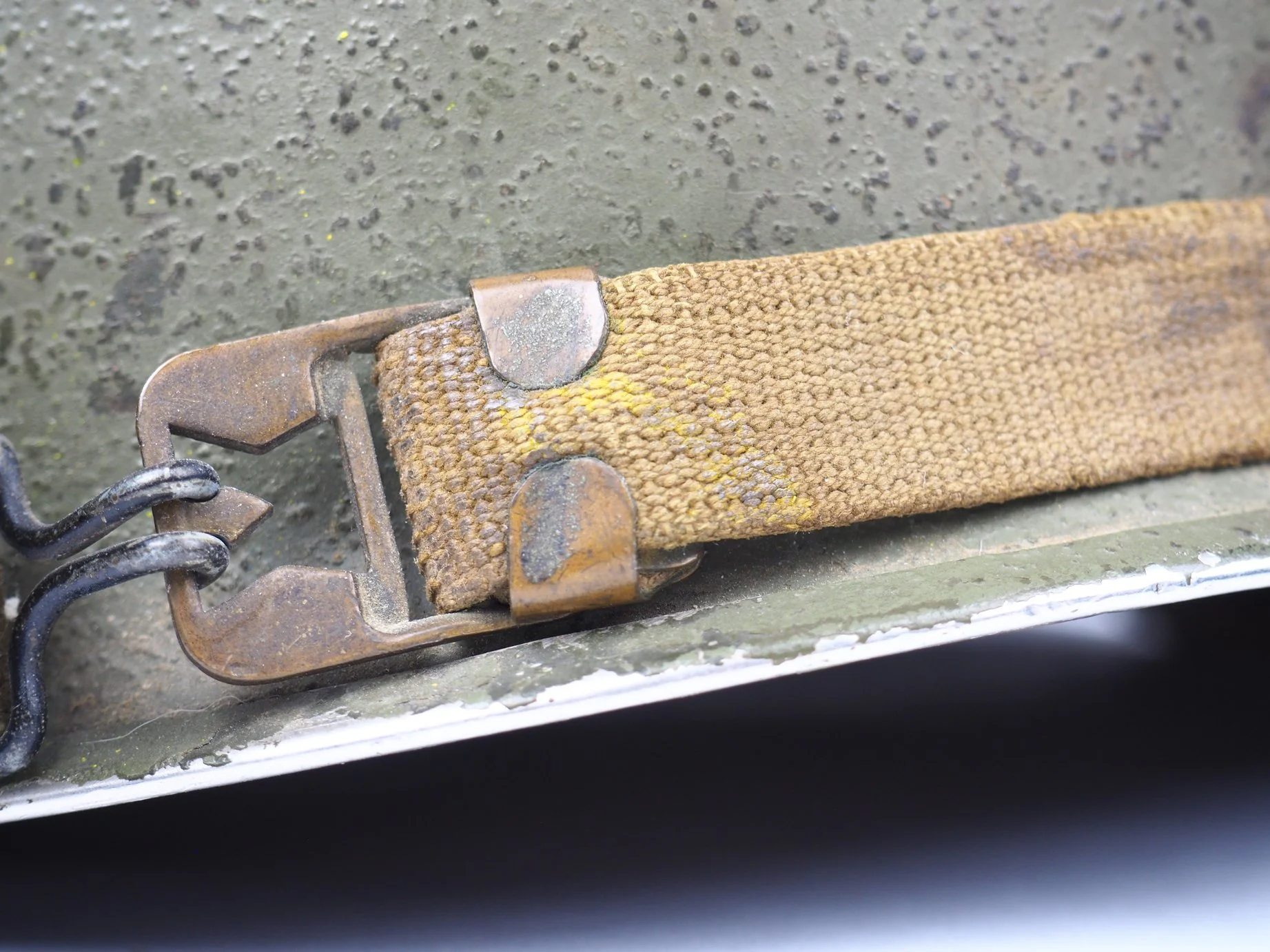
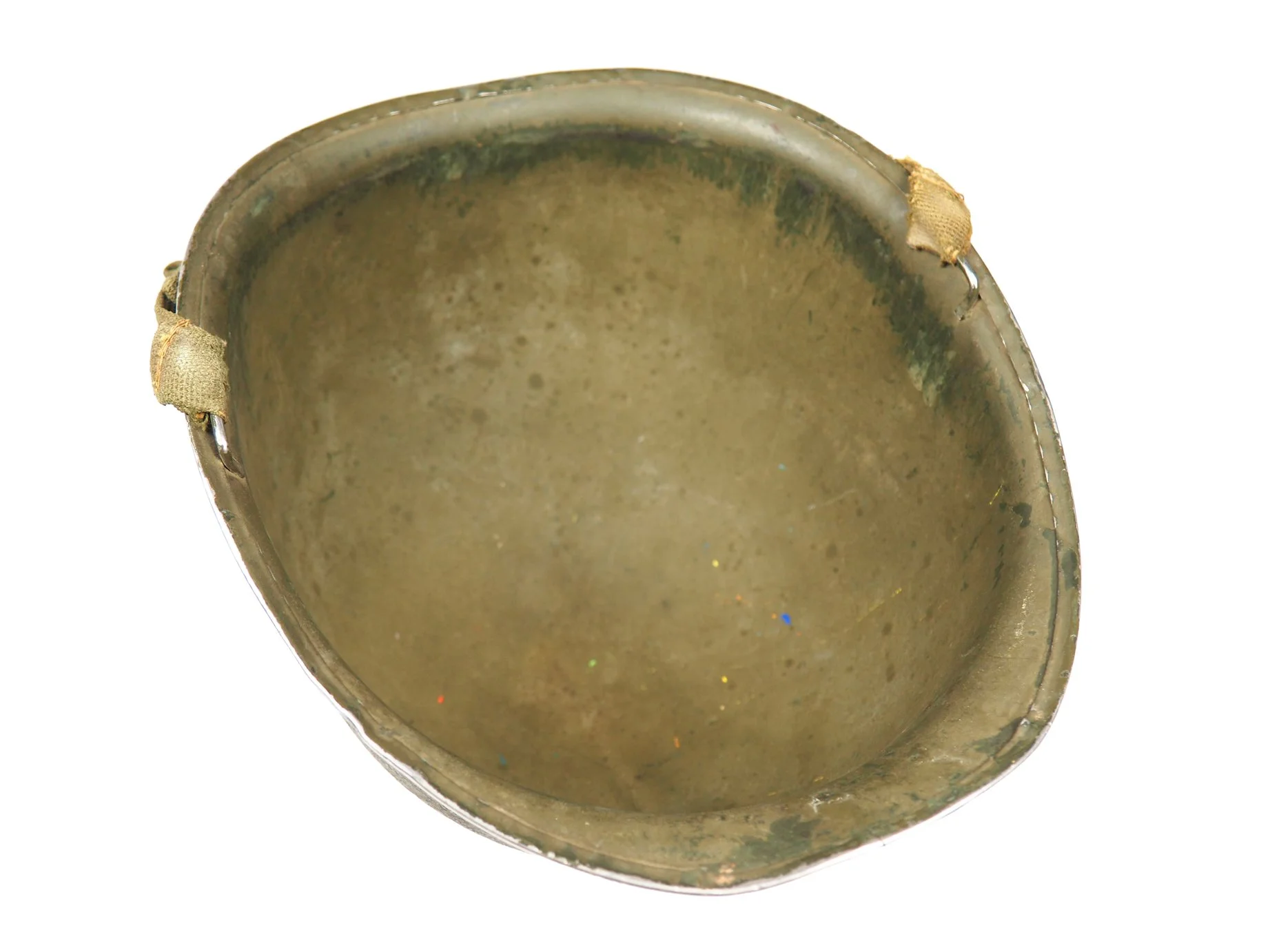
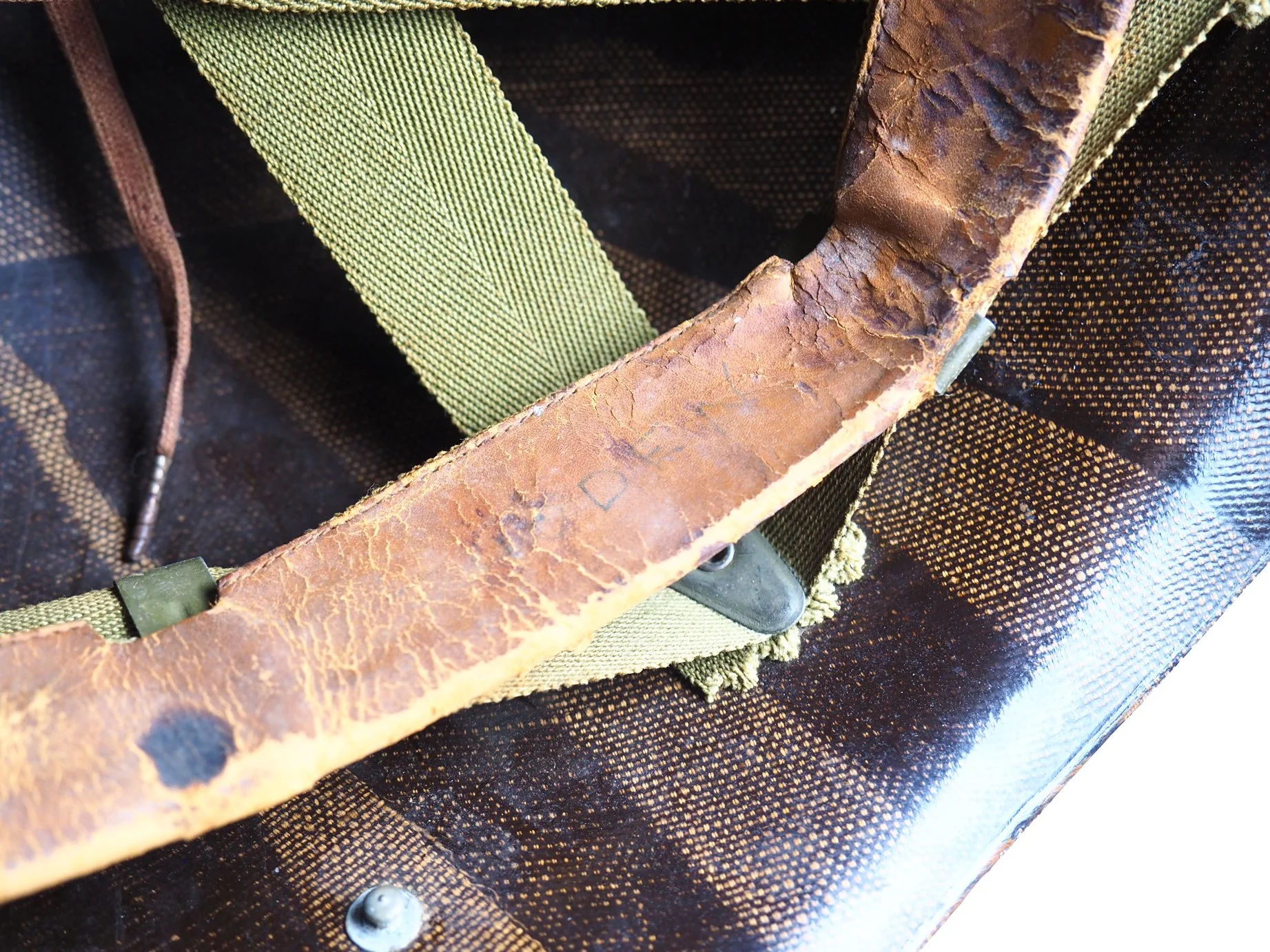
Faintly visible, "THODEN" can be seen written inside the liner.
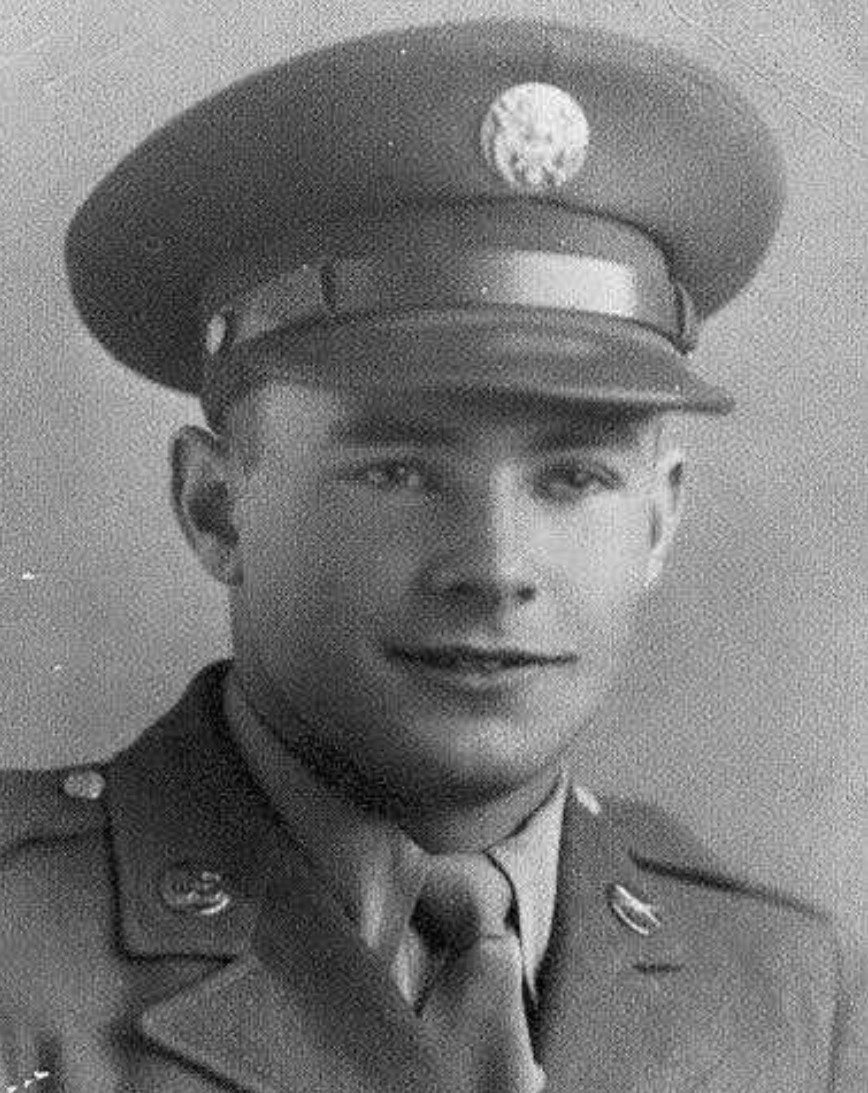
Edward Thoden, date unknown
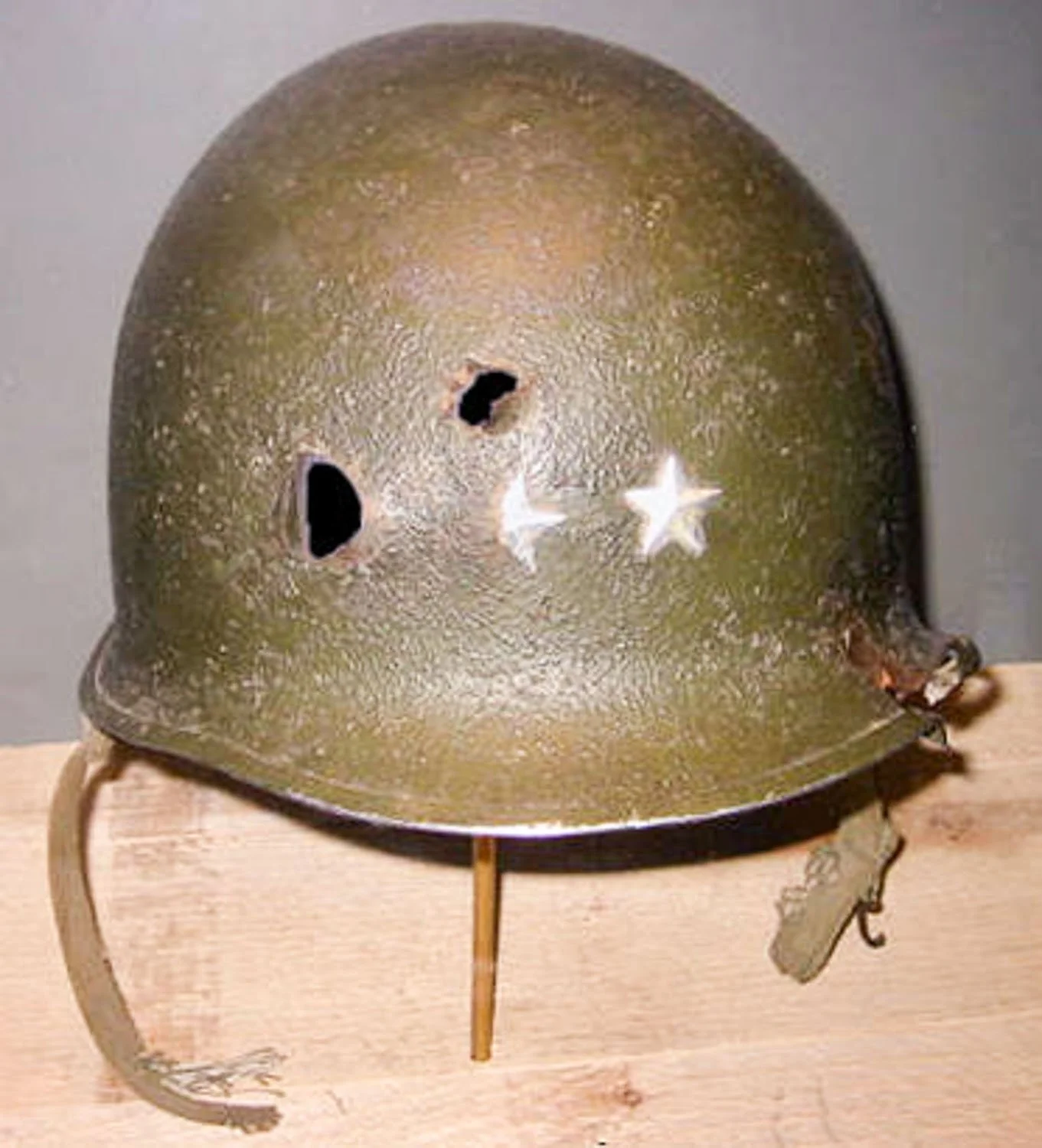
Rose’s recovered M-1 Helmet, which now resides in America.
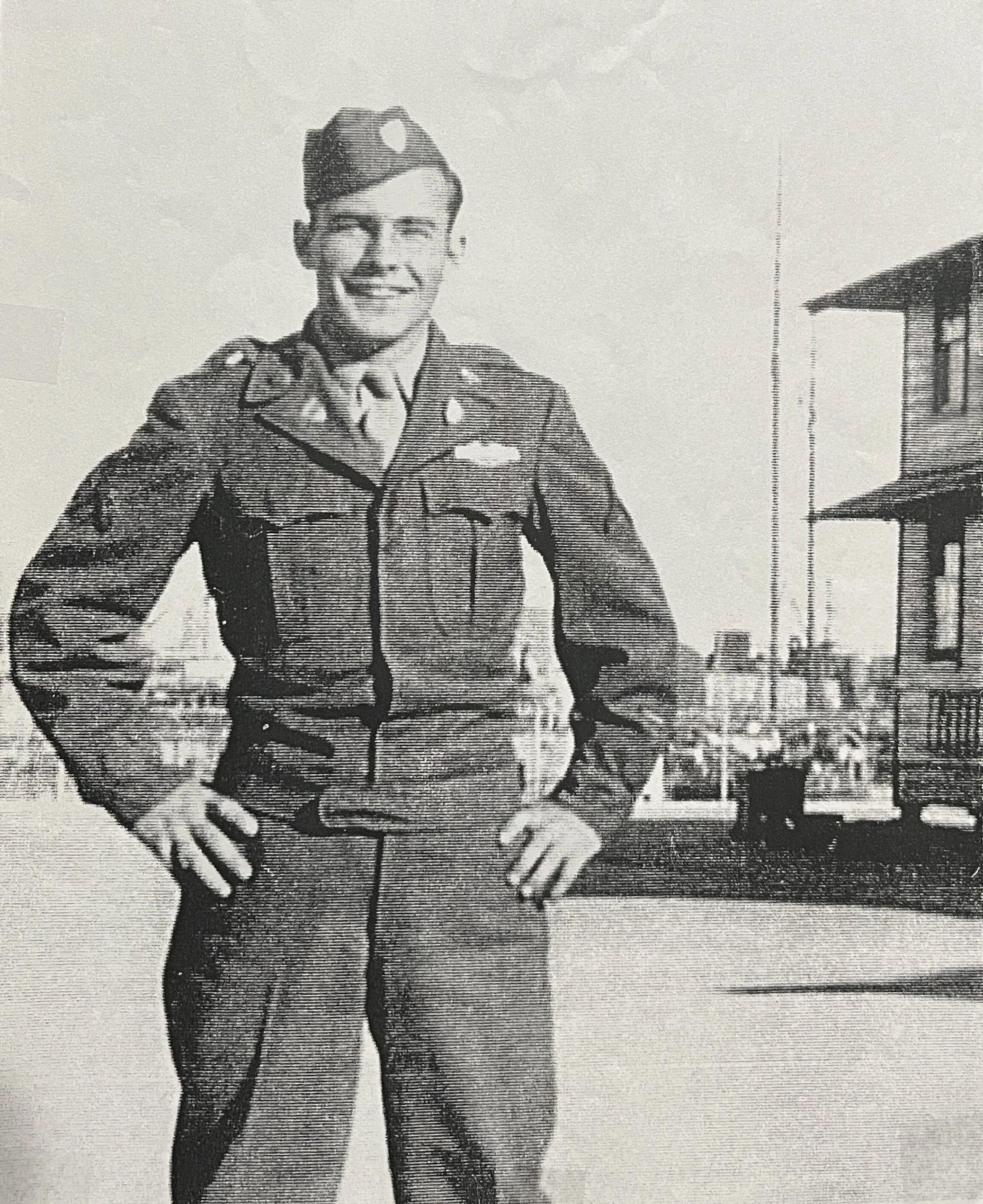
Edward Thoden, date unknown
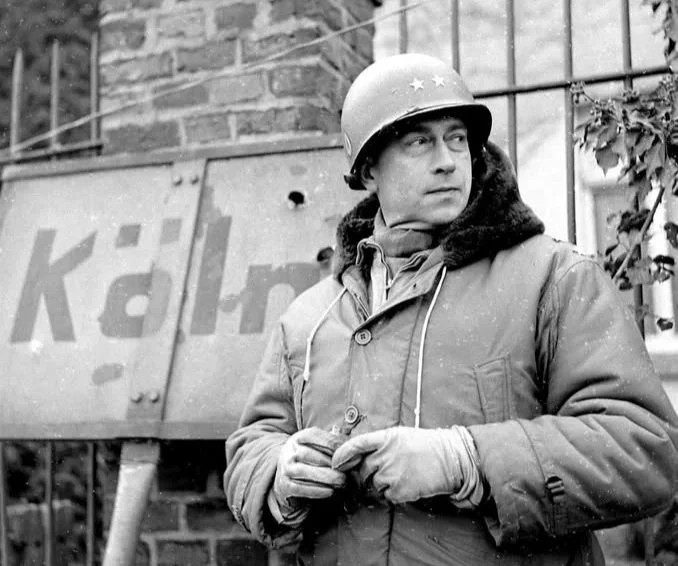
Maurice Rose, Cologne, Germany, spring of 1945. Note that his helmet, like most 3rd Armored Division M-1 Helmets from the Normandy Campaign, features a “Spearhead” paper decal on the right side. The right side of his helmet bears the 3rd Armored Division insignia.
Within a day of joining the unit, Edward would see combat south of the German city Paderborn. The battles surrounding this area in Germany were synonymous with other smaller battles in the spring of 1945, and it was a desperate attempt to delay the allies and stop the encirclement of the German army. The 104th Division was committed to fighting hastily formed SS regiments, comprised of SS combat school students and cadre, and to the North of 104th Infantry Division line, the 3rd Armored waged a struggle against a force of about 40 tanks from the neighboring armored school, where three German King Tiger tanks would brilliantly execute a concealed ambush on a hilltop resulting in over a dozen American vehicles destroyed. This action in Paderborn would also result in the death of Major General Maurice Rose, Commander of the 3rd Armored Division, on March 30th, 1945.
While riding in a jeep with some of his staff, Rose and his group ran into a column of German tanks. One of the tanks blocked the road and peeked out of the hatch with a submachine gun aimed at the men in the jeep. It is said that the men in the Jeep raised their hands in surrender, dropping their weapons. Major General Rose carried a .45 caliber pistol on his belt, and when reaching down to his waist to unclip the belt, was shot several times by the German tank commander, who mistook his act of compliance with malicious intent. The German armored column had no idea who they had just captured and killed, and Rose’s body was found later with all of his military documents still intact. Rose was considered by his men to be an outstanding combat leader, encouraging his men on the frontlines, and his death was a tragedy to many of those who served under him. He is buried in the Netherlands American Cemetery.
With the last major tank battle of the Western Front concluded, the combined arms task forces of the 3rd Armored and the 104th Division troops riding on the rear of the Spearhead’s steel beasts, they would continue to drive the nail into the German homeland. On April 11th, the 3rd Armored and 104th Division would uncover the Dora-Mittelbau Concentration Camp, where Germany used forced labor in obviously appalling conditions to construct V-2 rockets in an underground facility. Knowing well that the American army was knocking on their door, the SS camp guards took the remaining living prisoners on a death march east, yet, the 104th and 3rd Armored still found around 3,000 dead prisoners among about 750 barely grasping to life. Such horrific scenes of human degradation and mistreatment were forever burned in the minds of a 19 year old Edward Thoden and his fellow liberators.
From the departure of Paderborn on April 1st, Edward Thoden and the 104th Division would cover over 200 miles and reach the area of Thurland, Germany, on April 15, 1945, and the breakneck speed of the American advance made Blitzkreig look like child’s play. The actions in and around Thurland for the 2nd Battalion, 414th Infantry, would be a particularly memorable part of Edward Thoden’s time in Germany.
Upon reaching the town of Thurland on April 15, Task Force Lovelady began to take fire and the 2nd Battalion, 414th Infantry would dismount. The town of Thurland was captured in about six hours, and the infantry pushed to the woods north of Thurland near the Mulde River. Just between the Mulde and Thurland lay their next objective, the town of Raguhn. Thurland would become the command post for 2nd Battalion, 33rd Armored, and in the night of the 16th - 17th April, a strong German counterattack would overcome the defenses in Thurland, capturing as many as 113 American prisoners, one of whose story can be read here. 2nd Battlaion, 414th Infantry’s Commanding Officer, then Lieutenant Colonel Edward E. Rager stated that the last thing he heard from the CP at Thurland was that his adjutant claimed over the radio, “Germans were in the hallway of the CP and that he was burning all the records”. With some brute force, the 83rd Armored Reconnaissance Squadron reacquired the command post, along with most of the prisoners. Edward Thoden clearly recalls this event, and some events from the following days in a letter sent to a friend who was wounded in the battle for Thurland, Private First Class Henry E Gurney Jr.
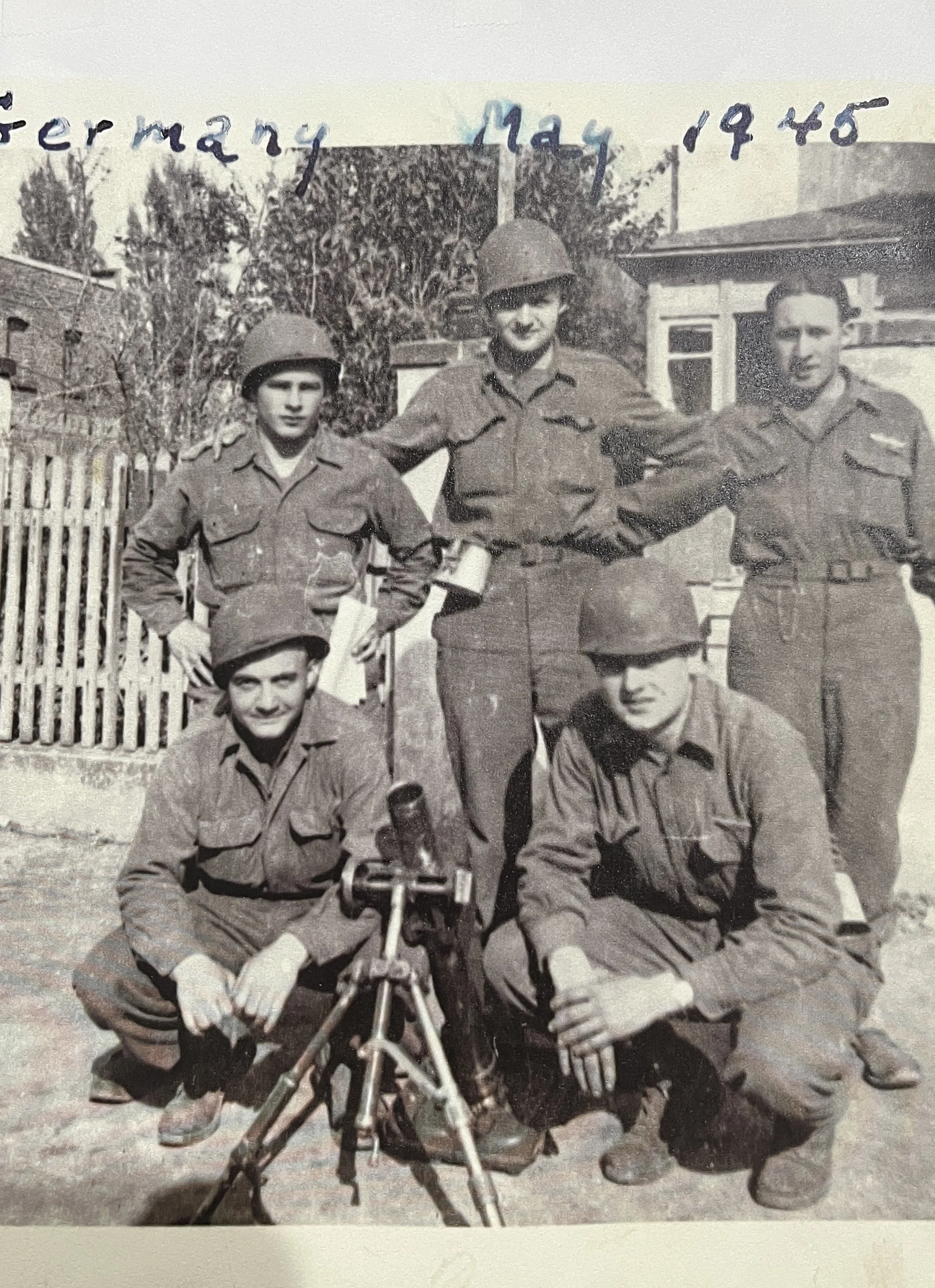
Edward Thoden, standing, far left. Germany, May 1945. Although the letter states the men with him are identified in this photo, I only received a copy of this photo and nothing is on the back.
Feb 16, 1999
Dear Henry,
I am responding to your letter appearing in the January issue of the Timberwolf Howl requesting letters from former members of Company E.
I was a member of this Company and remember quite clearly that April morning when you were shot in the stomach. We were in the edge of the woods ready to move out across the open field and into the town where you were encircled. The next thing we know, you and the others came running back across the field into the woods. You were holding the machine gun on your hip “Rambo Style” with your field jacket wrapped around the hot barrel and the “ammo” belt around your neck. I was only 18 yrs old then and this was impressive. Shortly after, I saw you being bandaged by a medic, and that was the last time I saw you. It is a relief to know you survived your wound and apparently doing well.
Enclosed is an enlargement of a picture of myself and the mortar squad. I have identified everyone in the picture. This picture was taken after we finally took the town of Raguhn and moved off the line. You will note we are all clean shaven and the dirt, dust and mud from riding with the 3rd Armored Division was removed. At this time I was in Sgt Swanson’s machine squad. As information, we never took that town from which you escaped. There was a counterattack by the enemy and we dug in. A shell exploded by the other machine squad while they were setting up. Boswell was wounded and I think Kraus was killed.
The next day we were moved back to Raguhn, where you remember the Germans blew up the bridge across the river as we were getting ready to cross. You will recall Fry was killed the night before you were wounded, then you, Boswell and Kraus were casualties. The machine gun squads were depleted of personnel. It was at this time I was put in your squad under Sgt. Swanson.
A few days later we crossed the river in assault boats in a night attack. The next day we captured the entire town of Raguhn. Platoon Sgts Lacy and Sabansky were killed in this action.
You might like to know Sgt Zank, Holcomb, Wooten, Kungle, Boswell and myself left the ETO at the end of June for Camp San Luis Obispo California. When these pictures were taken Sgt Swanson got Typhus and taken to a hospital. He never rejoined the Company. If there are any other GI’s you would like to know about, let me have their names and I'll prod my memory.
Again I say it was great to have read your letter and to know you survived. If you are ever down this way look me up. We have extra bedrooms and you are welcomed to stay. My telephone number is (Redacted).
May the good lord continue to bless you.
Ed Thoden
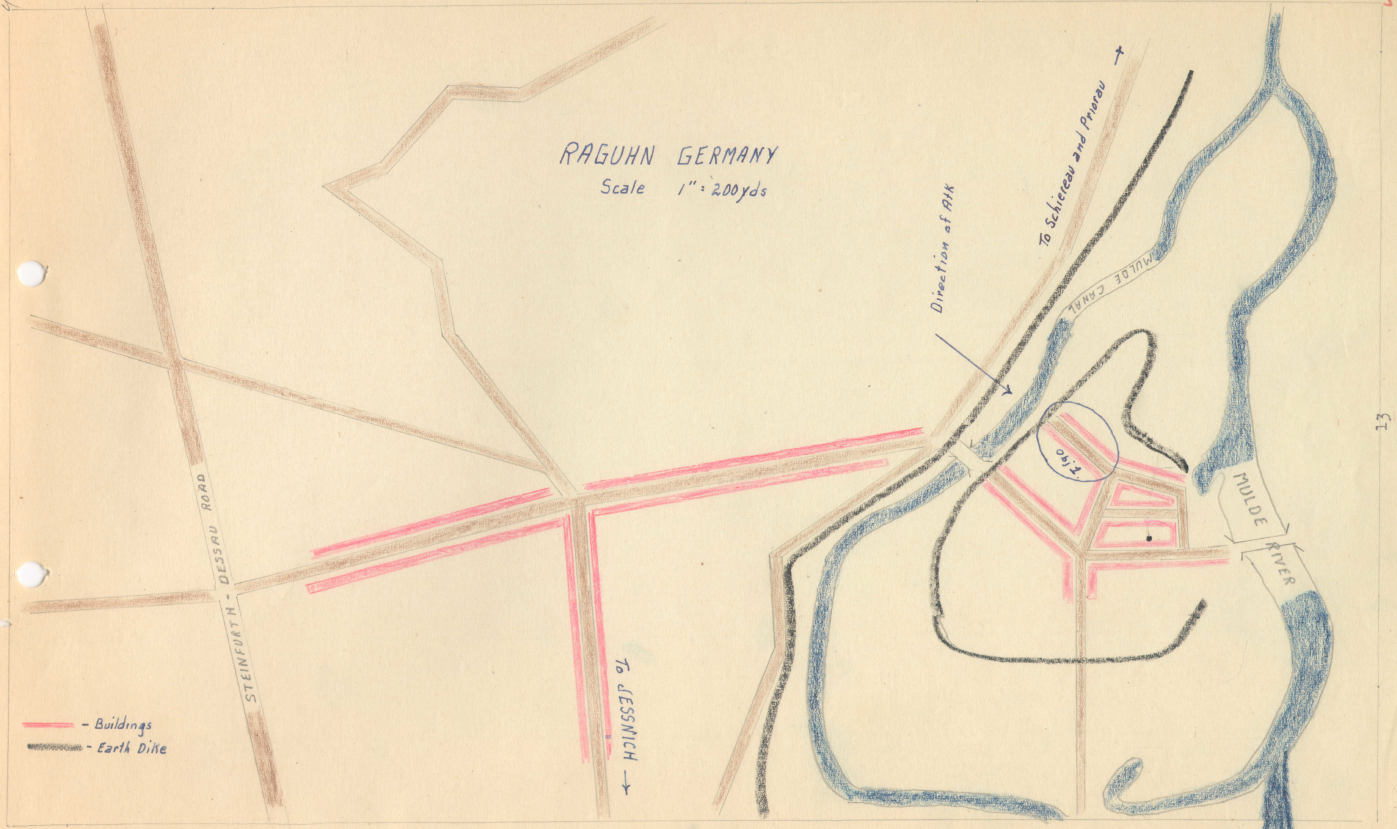
The final action for Edward Thoden and the 2nd Battalion, 414th Infantry would conclude in the streets and homes of Raguhn on April 21st. The battle that took place that day has a well written history thanks to the 2nd Battalion CO formerly mentioned, Lt. Col. Edward Rager. As seen in the illustration he created to the right, the plan was to have 2nd Battalion cross the canal east of Thurland and secure houses in a small neighborhood nestled between the Mulde River and canal. By a stroke of pure luck, a German soldier intent on surrendering swam the canal and informed the 2nd Battalion command that there were about two companies of Germans stretched thinly on the north and south of the dike, (labeled in black) and that the majority of them went into the homes (labeled objective 1 on the map) to sleep at night.
With that information given, the 2nd Battalion E Company leading, would cross the canal in boats with a jumpoff time of three in the morning. Under the cover of darkness, helmets and rifles softly glistening in the night, the men silently crossed the river and entered the town until fire discipline had been broken by necessity. About 40 Germans were captured, with 15-20 killed. As daylight broke, the combat progressed to conventional warfare, and at the end of the day, Raguhn was secured. By the end of the day, 200 Germans were captured and 50 were killed at the losses of 45 Timberwolf casualties. Tragically, two men mentioned in Edward’s letter were killed in this action - Sergeant Windsor H. Lacy of White Oak, Kentucky, and Sergeant James T. Sobansky, Pennsylvania. Certainly, to a young Edward Thoden, these two men were exemplary leaders to have graced his presence in a bitter time in history. Two days later, Edward and the rest of Task Force Lovelady would be pulled off of the line, later being sent home to prepare for the invasion of Japan that never occurred.
Ed would be honorably discharged from the army in 1946. Like most of us veterans now, Ed used the G.I. Bill and achieved a bachelor’s in civil engineering, and would work for several different railroad lines, retiring in 1989. He would marry in 1949 and have several children, one of which I was graciously able to contact and return a few photographs of Ed too. The courageous acts he and his comrades performed in the heart of Germany would forever define the Timberwolf men in the history books, but the things Ed did otherwise would define him as a man.
Edward S. Thoden
1926-2015